


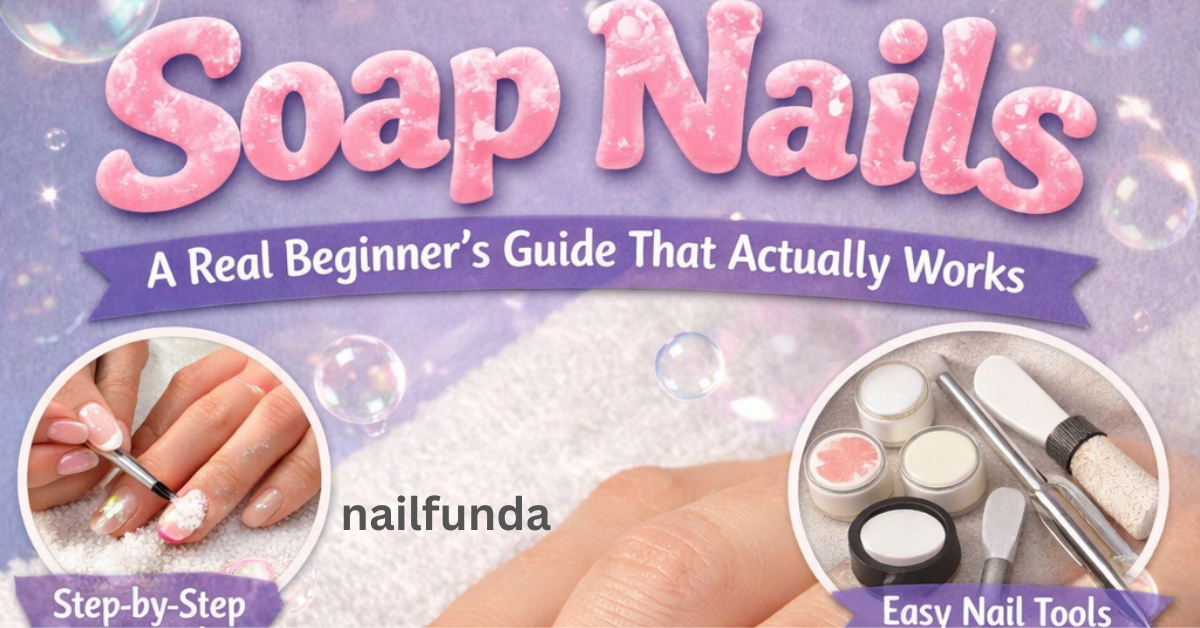
First Thing First – What Even Are Soap Nails?
Okay so you know how you’re scrolling through TikTok or Instagram and you see these hands. Nothing crazy on the nails. No rhinestones, no long coffin shapes, no neon colors. But something about them makes you stop. They just look… clean. Like really really clean. Like the person just walked out of a spa and hasn’t touched anything since.
That’s soap nails.
The name is weird. Soap? Like a bar of soap? But once you see them you get it. The nails look kind of wet, kind of glossy, kind of white but not actually white. More like someone added a drop of milk to a glass of water. That cloudy, soft, translucent look.
You can still see your natural nail underneath but it’s blurred. Like a filter for your nails.
And the shine? Glass level. Like you dipped your fingers in clear resin.
This whole thing blew up because of the “clean girl” aesthetic. You know the vibe. No makeup makeup. Hair slicked back. Gold hoops. And nails that look expensive without screaming for attention.
The best part? You don’t need to go to a salon. You don’t need to spend hours. You can do this at home even if you’ve only painted your nails three times in your life.
Why Bother Doing It Yourself?
Look I’m not gonna tell you salons are bad. They’re not. But for soap nails? Going to a salon every two weeks is a waste of money. Because soap nails look best on short nails. And short nails chip faster. So you’re basically paying again and again for something you can learn in one evening.
Also – and this is important – salon people sometimes rush. They put thick coats because thick coats dry faster under the lamp. But soap nails need thin coats. Like really thin. When you do it yourself, you control everything.
I messed up my first two tries. Third time it looked okay. Fourth time my friend asked which salon I went to. That’s the truth. You just need someone to tell you the exact steps and the exact mistakes to avoid. That’s what I’m doing here.
What You Actually Need (Not a Long Scary List)
You probably have half of this already.
For shaping and prep:
- A nail file. Nothing fancy. 180/240 grit from any drugstore.
- A buffer block. The spongy one.
- Cuticle pusher. Metal or wood. Even the back of a cheap orange stick works.
- Rubbing alcohol or nail dehydrator.
- Cotton pads.
- A tiny brush. Like an old eyeliner brush. This is for cleanup.
For the color:
- Milky white polish. Or sheer white. Or jelly white. Different brands call it different things. What you want is a white that is NOT opaque. If you hold the bottle up to light, you should see through it a little. Avoid anything that says “opaque white” or “pure white.” That’s correction fluid color. You don’t want that.
Some good ones I’ve tried:
- Essie Marshmallow (regular polish, needs three coats usually)
- OPI Funny Bunny (slightly pinkish, very pretty)
- Gelish Shall We Chalks? (if you use gel)
- DND Milky White (cheap and actually good)
For base and top:
- Base coat. Any brand.
- Glossy top coat. Not matte. Not satin. Full shine. Read the label twice.
- If using gel: UV/LED lamp. 36 watts or more.
For after:
- Cuticle oil. Do not skip this.
That’s it. No need for a hundred different brushes or a dust collector or any of that salon nonsense.
A Few Things Nobody Tells You Before You Start

Little stuff that makes a big difference.
The room you’re in should be cool. Not hot. Hot air makes polish dry weird and creates bubbles. Bubbles are your enemy.
Don’t shake the polish bottle. I know you want to. Don’t. Shaking puts bubbles inside the polish. Roll the bottle between your palms instead. Like you’re warming it up.
Your hand needs to be steady. Put your elbow on the table. Or rest your painting hand on the other hand. Whatever works. Just don’t hold it in the air like a waiter carrying a tray.
Good lighting. Not the yellow bedroom light. Natural daylight or a bright lamp. You need to see if your coats are thin enough.
And please. Please. Don’t touch your nails after you prep them. No scratching your face. No running fingers through your hair. No picking up your phone. Oils from your skin will ruin everything.
Step One – Shape Your Nails
Wash your hands first. Soap and water. Dry them completely.
Now look at your length. Soap nails want short or medium nails. Like right at your fingertip or maybe two millimeters past. If your nails are long, cut them. I tried soap nails on long nails once. Looked weird. Like plastic fake teeth. Short is better.
Shape? Soft oval or squoval. Not square. Square is too harsh. Not round like a ball either. Just softly rounded at the corners.
When you file, go in one direction. Don’t do that back-and-forth saw thing. That frays your nail and makes it peel later. One direction from left to right or right to left. Pick one and stick to it.
Step Two – Push Back Cuticles
Now take your cuticle pusher. Be gentle. Like really gentle. You’re not digging. You’re just pushing back the skin that’s stuck to your nail plate.
If your cuticles are super dry and stuck, put a little cuticle remover gel. Wait thirty seconds. Then push. Then wipe with a cotton pad.
People skip this step because it’s boring. Then their polish lifts after two days because the cuticle skin was in the way. Don’t be that person.
Step Three – Buff and Dehydrate
Take your buffer block. Lightly buff the surface of each nail. You’re not trying to make them thin. You’re just removing the natural shine. Three or four gentle passes is enough.
Now take rubbing alcohol or nail dehydrator on a cotton pad. Wipe every nail. One by one. After this, do NOT touch your nails with your fingers. Not even a little. Not even to “just check something.”
Step Four – Base Coat
Apply base coat. Thin layer. Very thin.
Start in the middle of the nail near the cuticle but leave a tiny gap. Like the width of a piece of paper. Then pull the brush toward the tip.
Then “cap the edge.” That means run the brush along the very tip of your nail. This seals it so water and dirt don’t get in from the front.
If you’re using gel, cure for the time your lamp says. Usually 30 to 60 seconds. Don’t guess. Don’t do extra time. Over-curing makes gel brittle.
If regular polish, wait two to three minutes.
Step Five – First Coat of Milky White
Here we go. This is where the magic happens.
Roll the bottle between your palms. Open it. Take the brush out. Wipe one side of the brush against the bottle rim. You don’t want a big blob. Just a small bead of polish on one side.
Apply in three strokes. One down the middle. One on the left side. One on the right side. Keep the brush almost flat against the nail. Not the tip of the brush.
The first coat will look terrible. Streaky. Patchy. Like you did something wrong. You didn’t. That’s normal. Milky polishes always look bad on the first coat.
Check your cuticles. Did any polish flood into the skin? If yes, take that tiny eyeliner brush, dip it in acetone, and clean it immediately. Right now. Not later. Once it dries, it’s harder to fix.
Cap the edge again.
Let it dry. If regular polish, wait five full minutes. If gel, cure it.
Step Six – Second Coat
Same exact thing. Wipe one side of the brush. Thin layer. Three strokes.
Now look at your nail. The second coat should start looking like something. It should be softly white but still see-through a little. You should still see your natural nail tip as a faint white line under the polish.
If you can’t see the nail tip at all, your coats are too thick or you used the wrong polish. That’s not a soap nail anymore. That’s just a white nail.
If it still looks streaky, don’t panic. Some polishes need a third coat. Some are just streaky by nature. You can either add a third thin coat or switch brands next time.
Step Seven – Third Coat (Only If You Need It)
Here’s how you decide. Look at your nails in natural light. If they look patchy or way too sheer (like you can see every ridge and stain on your nail), add a third very thin coat.
If they look like a soft, blurred version of your natural nail, stop. You’re done with color.
Most people overdo this. They think more coats = better. For soap nails, less is more. Two thin coats is usually the sweet spot. Three thin coats if your polish is very sheer.
Step Eight – Glossy Top Coat
This step makes or breaks everything.
You need a top coat that is GLOSSY. Not matte. Not satin. Not “natural finish.” Full glass-level shine.
Apply it slightly thicker than your color coats. Not crazy thick, but a little more generous. This helps it self-level and gives that plump, wet look.
Cap the edge one last time.
If gel, cure it. If regular polish, let it dry. Don’t touch anything. Don’t check your phone. Don’t scratch your nose. Just sit there.
When everything is completely dry – and I mean completely – take your cuticle oil and put it on every cuticle. Massage it in. This is not optional. Dry cuticles ruin the clean girl look. Soft cuticles make your nails look like they cost money.
The Mistakes I Made So You Don’t Have To
I messed up a lot. Here’s what I learned.
Mistake one: Thick coats. I thought thick polish would last longer. It didn’t. It just looked lumpy and took forever to dry. Thin coats. Always thin.
Mistake two: Ignoring the cuticles. I let polish touch my skin. It dried. Then it lifted. Then the whole nail peeled off in one sheet. Now I check after every coat with that tiny brush.
Mistake three: Bubbles. I shook the bottle. Bubbles everywhere. I thought they would disappear when the polish dried. They don’t. They stay there forever. Roll the bottle. Don’t shake.
Mistake four: Skipping top coat. One time I forgot. Just forgot. The nails looked dull and sad. Soap nails without top coat is like a car without wax. Technically fine but not the same.
Mistake five: No cuticle oil. I thought oil would ruin the polish. It doesn’t. Oil on the skin around the nail keeps everything looking fresh. Dry cuticles make even perfect polish look bad.
If You’re Using Regular Polish (Not Gel)
Regular polish is easier to remove and fix mistakes. But it takes forever to dry.
The trick is thin coats and patience. Between each coat, wait five minutes. That means base coat, five minutes. First milky coat, five minutes. Second milky coat, five minutes. Top coat, ten minutes. Total almost half an hour of sitting still. Yes it’s boring. Put on a show.
Another trick: quick dry drops. They sell them at drugstores. Two drops on each nail and your polish sets in two minutes. Worth every penny.
One more trick: after your top coat, dip your nails in cold water for two minutes. This actually works. It sets the polish faster.
With regular polish, soap nails last about five to seven days. Then the tips start wearing off. You can fix it by adding another thin top coat on day four.
If You’re Using Gel Polish
Gel lasts two to three weeks. The shine never dulls. But removal is a pain. You have to soak in acetone and wrap with foil.
With gel, the most important thing is cure time. Don’t guess. Every brand is different. Read the instructions. Usually 30 to 60 seconds.
Don’t over-cure. Leaving it under the lamp for two minutes thinking “extra safe” actually makes the gel brittle. It will chip faster.
Don’t under-cure either. If it’s still tacky and wet in spots, it will wrinkle.
Also gel leaves a sticky layer after each cure. That’s normal. Wipe it off with alcohol before the next coat. But after the final top coat, don’t wipe. That sticky layer is what gives gel that glassy look.
Which Nail Length Looks Best?
I’ve tried all lengths.
Short nails – right at fingertip length. These look the best. Your fingers look longer. Your nail bed looks bigger. And short nails don’t break. This is the classic soap nail look.
Medium nails – two to three millimeters past your fingertip. Also good. A little more dramatic but still soft. Just keep your coats thin.
Long nails – five millimeters or more. Honestly? Not great. They start looking fake. Like plastic press-ons. If you really want long soap nails, use only two thin coats. Not three.
My advice? Start short. Practice on short nails. Once you get the technique right, experiment with medium.
What If the Color Looks Weird on Your Skin?
Soap nails look different on different skin tones. Some milky whites are cool-toned (slightly blue or gray). Some are warm-toned (slightly yellow).
If you put on the milky white and it looks off – too gray, too yellow, too something – don’t give up. Try this.
Before your milky white, put one thin coat of sheer pink or sheer peach. Just a whisper of color. Then put your milky white on top. The pink or peach will cancel out the weird undertone.
I have a friend with olive skin. She tried soap nails and hated them. Looked ashy. I told her to try a peach base. Now she wears soap nails all the time.
Test on one finger first. See what works for you.
How to Make Them Last Longer
Regular polish: five to seven days.
Gel polish: two to three weeks.
Want more?
Buff your nails well before starting. More than you think. The polish needs something to grip.
Use a dehydrator. Alcohol works but actual nail dehydrator is better.
Cap the edge every single time. Base coat, each color coat, top coat. Every time.
Reapply top coat after three or four days. Just one thin layer of top coat over everything. Brings back the shine and covers tip wear.
Cuticle oil every day. Morning and night. This keeps the skin around your nail soft and flexible. When the skin is dry and hard, it pulls at the polish edge. Soft skin doesn’t.
Wear gloves when washing dishes. Hot water is the enemy of nail polish. It makes it expand and contract and lift.
With gel and good care, I’ve gotten three weeks. With regular polish, I’ve pushed it to eight days before I gave up and redid them.
Fun Variations to Try Later
Once you get the basic soap nail down, try these.
Pearl soap nails. Before your top coat, dust a tiny bit of iridescent pearl powder on the nail. Rub it in with a sponge or your finger. Then top coat. Looks like a soap bubble caught in sunlight.
Rose soap nails. Mix one drop of sheer pink polish into your milky white. Gives a warm, romantic feel. Really pretty on fair skin.
Jelly soap nails. Use a clear jelly polish (completely see-through) and add one single drop of white. Mix well. This is almost transparent. Very natural. Very “I woke up like this.”
Barely there soap nails. Skip the milky white entirely. Just use a sheer nude base and a glossy top coat. That’s it. People will think you have naturally perfect nails.
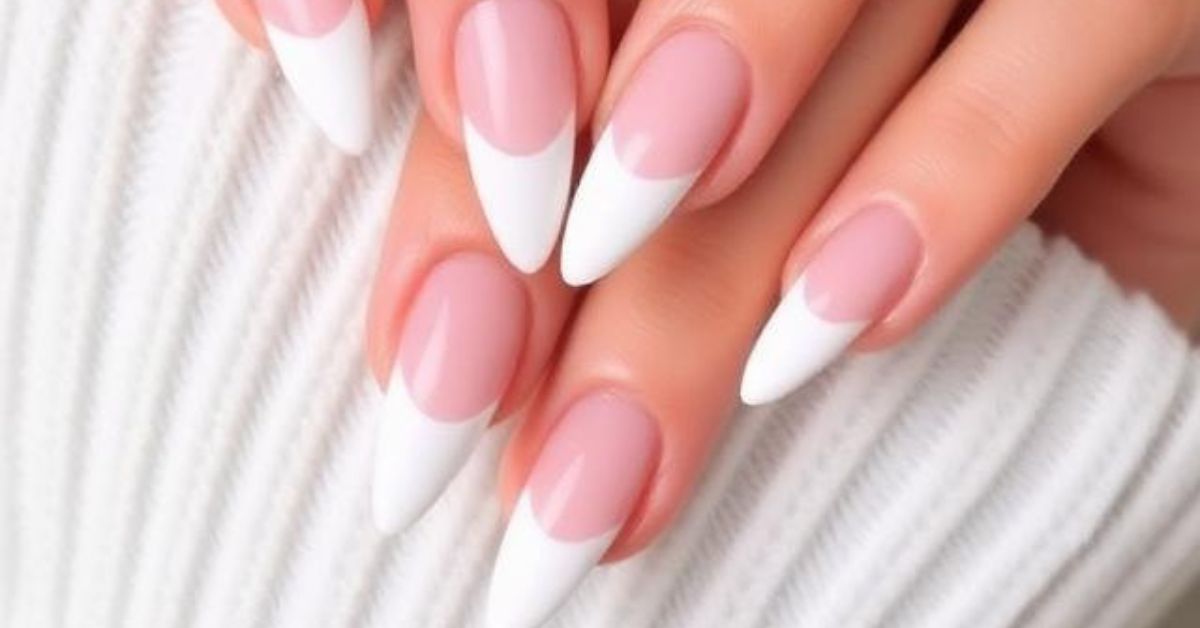
French soap nails. Do your normal soap nails. Then add a tiny bit of extra white just at the tips. Blur the line with a brush. It’s like a French manicure but softer.
Last Words
Look. Your first try probably won’t be perfect. Mine wasn’t. My second try was better. My third try I was happy. My fourth try my friend asked which salon I went to.
That’s just how it works. Milky polishes are different from regular creme polishes. They need thinner coats. More patience. Better cleanup.
Your Attractive Heading
But once you get it? You’ll understand the hype. Soap nails make you feel put together without looking like you tried too hard. They go with everything. Gold jewelry. Silver. Jeans. Dresses. Work. Weekends. They never look dated because they’re not really a trend. They’re just a better version of clean nails.
So get your stuff. Roll the bottle (don’t shake). Buff your nails. Push your cuticles. Apply thin coats. Cap the edge. Glossy top coat. Cuticle oil.
That’s it.
Now go do your nails. And when someone asks you where you got them done, you can say “bathroom counter, two episodes of a show, and a lot of patience.”