Nail art instruments are the tools that turn plain polish into detailed nail art, from fine lines and dots to stamped patterns and smooth, shaped nails. You do not need every tool at once, but the right instruments make clean work much easier and help your manicure last longer. A good nail art brush for French tips is a good place to start, because it shows how much control a proper brush gives you. In this complete guide, you will learn what nail art instruments are, which brushes, dotting tools, files, and cuticle tools to buy, how to choose them, and how to care for them.
What Are Nail Art Instruments?
Nail art instruments are the hand tools and small electric tools used to shape, clean, decorate, and finish nails. They include brushes for painting, dotting tools for spots, files and buffers for shaping, cuticle pushers and nippers for tidy cuticles, stamping plates for patterns, and electric drills for shaping gel and acrylic. Some instruments are for preparation, some are for decoration, and some are for finishing. Together, they let you control every part of a manicure, from the shape of the nail to the smallest dot. Beginners can start with a small set, while professionals use a wider set for faster, more detailed work.
Essential Nail Art Brushes
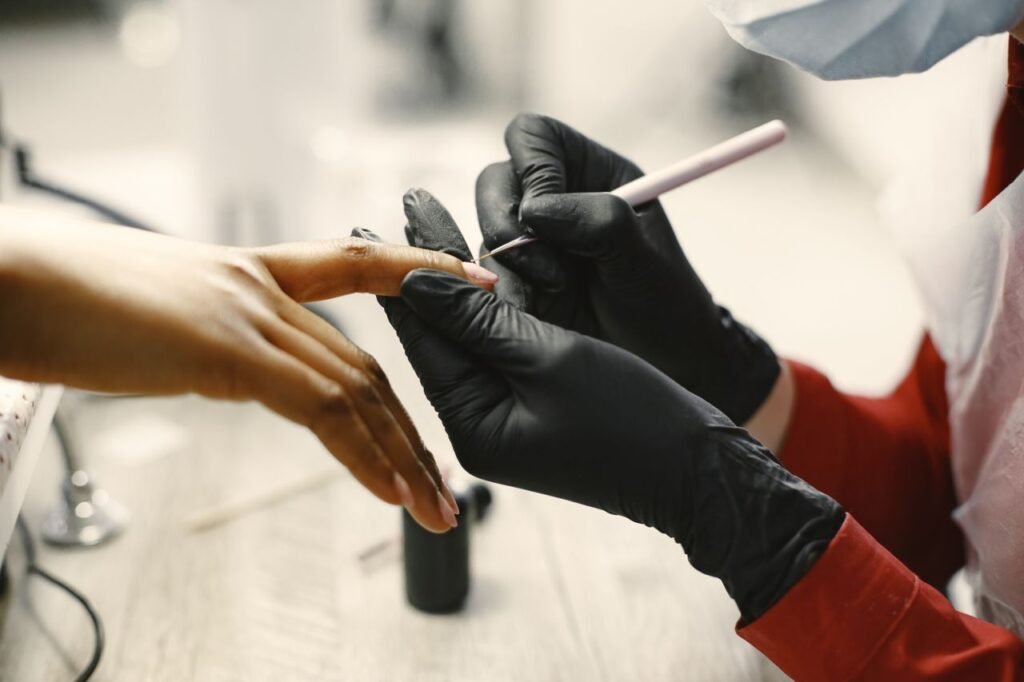
Brushes are the most important nail art instruments, because almost every design starts with a brush. A good brush holds polish well, keeps a fine point, and does not shed hairs. Look for synthetic bristles for gel and acrylic, and soft natural bristles for watercolour-style art. Clean brushes after every use so they keep their shape.
- Detail brush: a long, thin brush for fine lines, outlines, and writing.
- Flat brush: a wide, flat brush for one-stroke flowers, ombre, and filling large areas.
- Fan brush: a spread-out brush for soft gradients, glitter, and feathered effects.
- Angled brush: a slanted brush for French tips, geometric shapes, and sharp edges.
- Acrylic brush: a firm, pointed brush for building acrylic nails. See our guide to the acrylic nail brush for sizes and care.
- Liner brush: an extra-fine brush for tiny details, swirls, and lace patterns.
Dotting Tools, Files, and Buffers
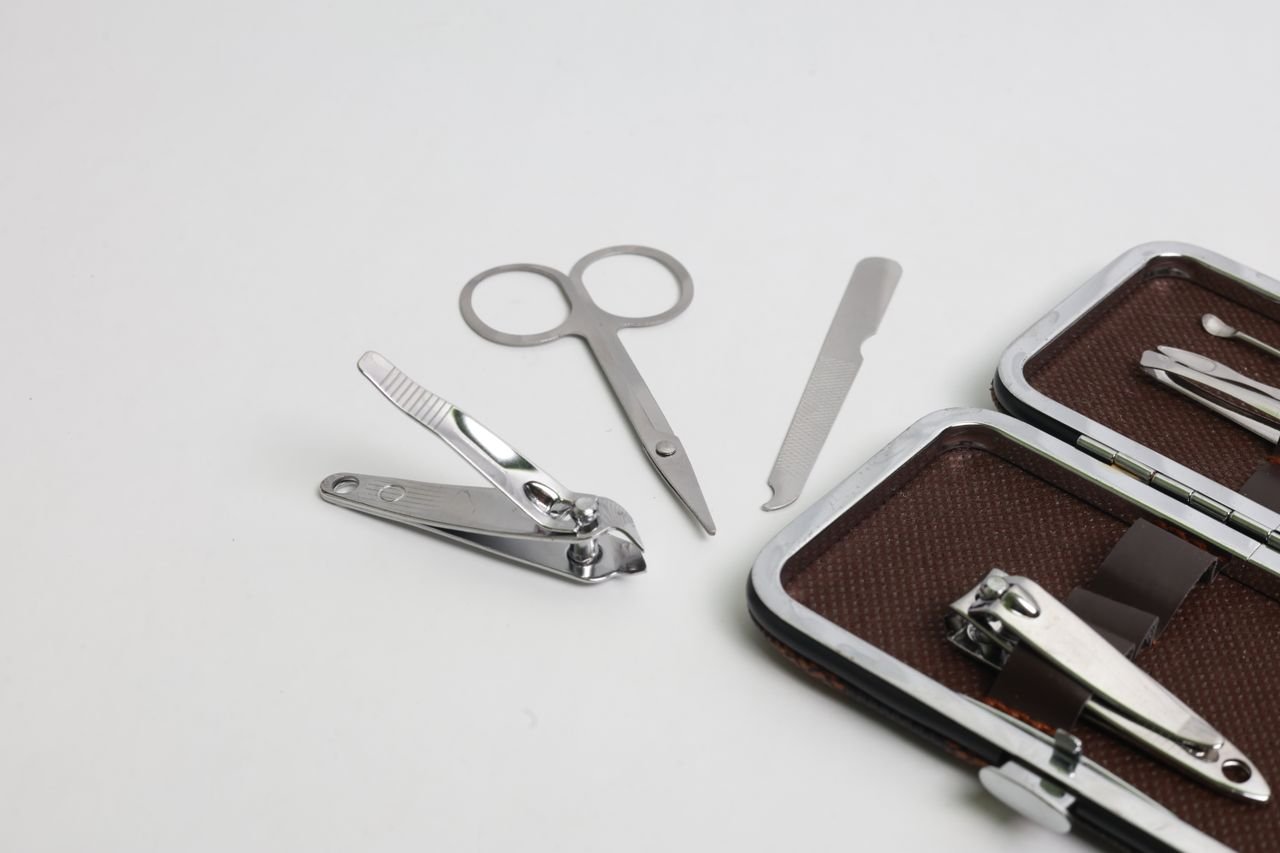
Dotting tools are small sticks with a metal ball at each end. Use a large ball for big dots and a small ball for tiny dots, flowers, and centres. They are cheap, easy to use, and perfect for beginners. Nail files shape the nail, and buffers smooth the surface so polish sticks well. Use a coarse file, about 180 grit, for shaping, and a fine file, about 240 grit, for smoothing edges. A buffer block with four sides can smooth, shine, and finish the nail in a few passes. Always file in one direction, not back and forth, to avoid splitting the nail.
Cuticle Tools, Stamping, and Drills
Cuticle tools keep the nail bed neat before any art goes on. A cuticle pusher gently pushes back soft cuticles, and a cuticle nipper trims only loose, dead skin. Never cut healthy cuticles, because they protect the nail from infection. Stamping is a fast way to add patterns: you paint a design plate, scrape off extra polish, press a stamper onto the plate, and roll it onto the nail. An electric nail drill, also called an e-file, shapes gel and acrylic, removes old product, and smooths the surface. Drills are powerful, so beginners should practise on low speed and use gentle pressure.
How to Choose Nail Art Instruments
Choose nail art instruments by your skill level, your nail type, and how often you will use them. Beginners should buy a small, affordable set with a detail brush, a dotting tool, a file, a buffer, and a cuticle pusher. Check that handles feel comfortable and that brushes keep a point when wet. For gel work, choose tools that can be wiped clean with alcohol, and for acrylic, choose a brush with a firm belly that holds liquid well. Read reviews, buy from a known brand, and avoid very cheap sets that shed bristles or rust. A few good tools will last longer and work better than a large set of poor tools.
Beginner Kit vs Pro Kit
A beginner kit should be simple, cheap, and easy to learn with. A pro kit adds electric tools and specialist brushes for speed and detail. Use this comparison to decide what to buy first.
- Beginner kit: detail brush, dotting tool, nail file, buffer block, cuticle pusher, nail clippers, and a basic top coat. This kit covers shaping, simple dots, lines, and French tips.
- Pro kit: all beginner tools, plus an electric drill, several acrylic and gel brushes, stamping plates and stamper, striping tape, rhinestone picker, UV or LED lamp, and a wide range of polishes. For lamp work, see our guide to gel nails with a UV lamp.
How to Clean and Care for Nail Art Instruments
Clean tools last longer and are safer to use. Wash metal tools with warm, soapy water, dry them well, and wipe them with alcohol to stop germs spreading. Clean brushes with brush cleaner after every use, reshape the tip, and store them flat or upright with the bristles protected. Our guide to nail brush cleaner explains the best way to wash brushes without ruining them. Store files and buffers in a dry case, and replace them when they lose their grit. Never share tools without cleaning them first, and keep cuticle tools away from damp places so they do not rust. The American Academy of Dermatology shares nail care basics, including how to care for cuticles and avoid infection.
Frequently Asked Questions
What nail art instruments do beginners need first?
Start with a detail brush, a dotting tool, a nail file, a buffer, and a cuticle pusher. These five tools cover most simple designs and cost little to buy.
Are electric nail drills safe for beginners?
Yes, if you use low speed, light pressure, and the right bit. Practise on a fake nail first, and stop if the nail feels hot or sore.
How often should I replace nail art instruments?
Replace files and buffers every few months, or when they feel smooth. Replace brushes when they shed, split, or lose their point. Metal tools can last for years with good cleaning.
Nail art instruments are an investment in better manicures. Start with a small beginner kit, learn one tool at a time, and add new instruments as your skills grow. With clean, well-chosen tools, even simple designs look neat, and your nails will stay healthier too.